Discovering St. Lawrence River & St. Lawrence Seaway
There is a quiet majesty to the St. Lawrence—less dramatic than Alaska, perhaps, but no less compelling. It is a river that tells its story slowly, in layers of history, culture, and movement.
Sailing here feels different. The water is not wilderness in its rawest form, but something shaped—negotiated between nature and human ambition. The river begins as an inland sea, fed by the Great Lakes, before widening into an estuary that breathes with the rhythm of tides. Along the way, it carries not just water, but centuries of commerce, migration, and memory.
On deck, the experience is contemplative. Instead of towering glaciers, you watch the subtle shifts—working harbours, church spires rising above quiet towns, the silhouettes of cargo ships moving with deliberate grace. The Seaway’s locks become moments of pause, lifting and lowering vessels like a carefully choreographed exchange between engineering and nature.
Yet there is beauty here, undeniably so. Rocky coastlines soften into green valleys. Mist lingers over the water in the early morning, and further seaward, whales begin to appear—dark shapes cutting through the current.
What makes the St. Lawrence compelling is its intimacy. Ports are close, accessible, human in scale. You step ashore and find yourself immediately within the rhythm of local life—markets, cafés, old stone streets that feel lived-in rather than preserved.
This is not a journey of spectacle. It is a journey of connection—between past and present, between land and water, between the traveller and a place that reveals itself quietly, but completely.
Aboard the Seabourn Quest
There is something deeply satisfying about a ship that understands restraint. The Seabourn Quest does not attempt grandeur in the obvious sense. Instead, it offers something more refined—space, calm, and a certain quiet confidence.
With fewer guests onboard, the atmosphere shifts immediately. There is no sense of crowd or urgency. Public spaces feel considered rather than busy, designed for conversation or solitude depending on what the moment asks of you.
Suites blur the line between accommodation and retreat. Verandas open outward to the passing coastline, inviting you to linger—coffee in hand, watching as the river narrows or widens around you. Interiors are understated, allowing the outside world to remain the focus.
Life onboard unfolds gently. Mornings begin slowly, perhaps with a walk on deck as the ship approaches a new port. Afternoons might bring a lecture—an introduction to the region’s history or culture—or simply time spent watching the shoreline drift by.
Dining becomes an anchor point of the day. There is a sense of intention behind each meal, from elegant evening dining to something more casual by the pool. The experience feels curated, yet never rigid.
Service, too, follows this philosophy. It is attentive, but never overbearing. Names are remembered. Preferences anticipated. There is an ease to it that allows you to settle in quickly, as though you’ve been here longer than you have.
The Quest does not compete with the journey—it supports it. It creates space for reflection, for observation, for a kind of travel that values depth over distraction.
Cruising with Seabourn
Seabourn’s approach to travel is not built around scale—it is built around intention. Everything feels measured, deliberate, and quietly refined.
The experience begins with simplicity. There are no constant decisions to be made about what is included or what comes next. Instead, the details are already taken care of, allowing you to focus on the journey itself.
What sets Seabourn apart is its sense of intimacy. With fewer guests, interactions feel more personal—both onboard and ashore. Excursions unfold in smaller groups, often guided by experts who bring context to what you’re seeing. A historic street becomes more than architecture; it becomes narrative.
There is also a strong emphasis on culture. Lectures, performances, and local briefings are not filler—they are part of the experience. They deepen your understanding, creating a connection that lingers beyond the visit itself.
The onboard atmosphere reflects this mindset. It is elegant, certainly, but without pretension. Guests are well-traveled, curious, and comfortable in a space that values quality over spectacle.
Seabourn appeals to those who travel not just to see, but to understand. It is not about ticking destinations off a list. It is about engaging with them—taking the time to notice, to learn, and to appreciate.
For a journey along the St. Lawrence, this approach feels particularly well-suited. The region itself is layered, nuanced, and best experienced slowly.
And Seabourn, in its quiet way, allows exactly that.
Guide to St. Lawrence Ports
Montréal
Montréal arrives with a certain energy—unexpected, vibrant, and unmistakably alive.
Stepping ashore, the transition is immediate. The river gives way to cobbled streets, where Old Montréal unfolds in warm stone and soft light. There is a European sensibility here, but it is not imitation—it is lived, layered into the city’s character.
Notre-Dame Basilica stands as a centrepiece, its interior a dramatic contrast of colour and light. Yet beyond it, the city softens. Cafés spill onto sidewalks. Conversations drift between French and English. There is a rhythm to it—unhurried, yet full of life.
Food, here, is not simply sustenance—it is identity. From the familiar comfort of smoked-meat sandwiches to the indulgence of fresh pastries and maple-infused treats, Montréal invites you to linger at the table. Markets like Jean-Talon offer a deeper glimpse—local produce, cheeses, and a sense of community that feels authentic rather than curated.
Beyond Old Montréal, the city reveals its layers. Mile End hums with creativity, Mount Royal offers a pause above the skyline, and neighbourhood streets reward those willing to wander.
What defines Montréal is its balance. It is both historic and modern, structured yet relaxed, familiar yet distinct.
And perhaps that is its greatest appeal—it does not ask to be explored in a single day. It simply invites you in, knowing you will wish you had more time.
Québec City
Québec City feels like a memory of Europe, carefully preserved yet entirely its own.
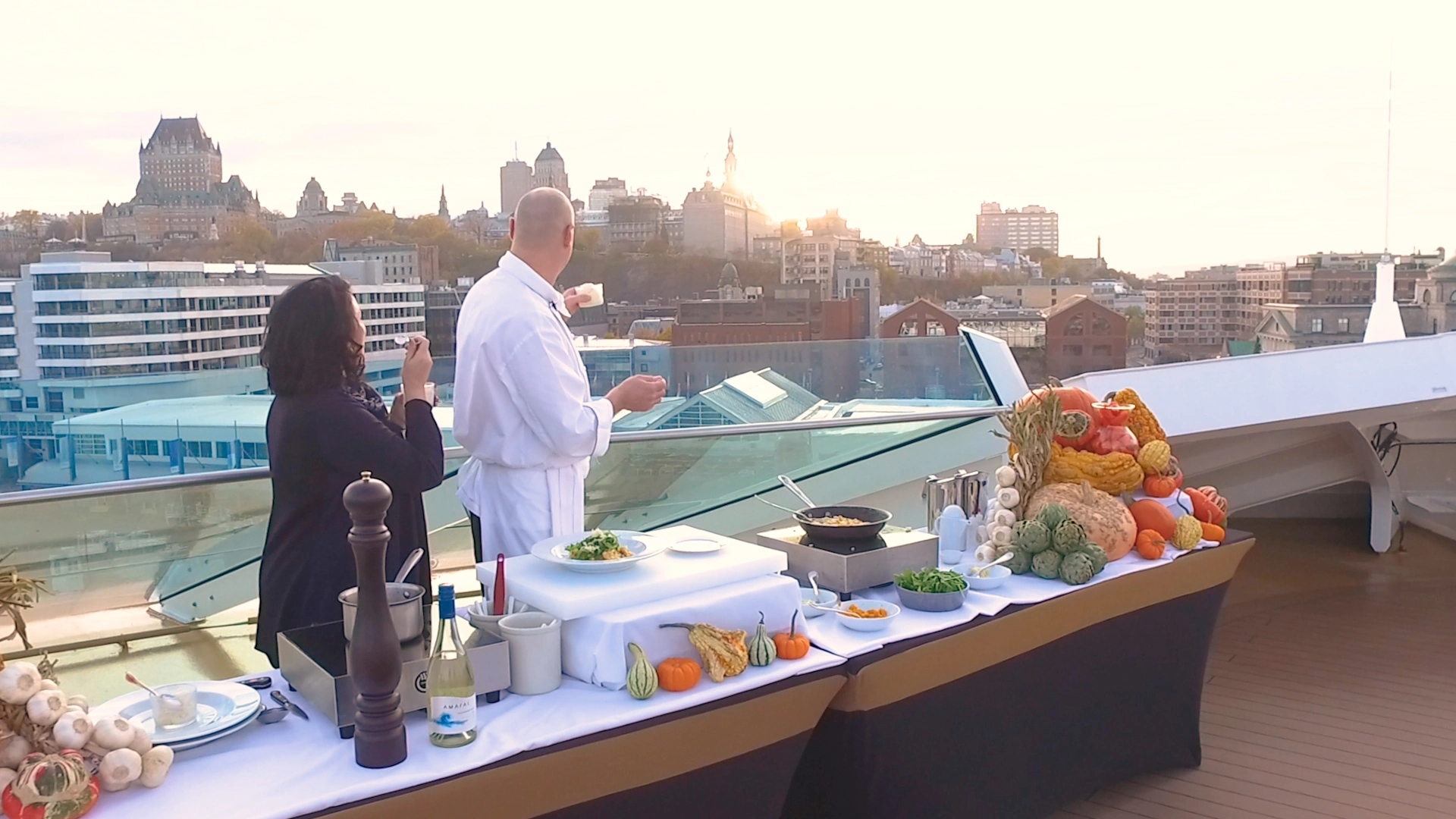
The approach itself is striking. Perched above the river, the city rises in tiers of stone and slate, crowned by the Château Frontenac—a presence as iconic as it is imposing. From the moment you arrive, there is a sense of stepping into another time.
Within the walls of Old Québec, the streets narrow and curve, revealing small details at every turn. Place Royale offers a glimpse into the city’s origins, while Dufferin Terrace opens outward to sweeping views of the St. Lawrence below.
There is an intimacy to the city’s scale. Distances are short, but the experience feels rich. A single walk can take you from fortified walls to quiet cafés, from historic landmarks to artisan boutiques tucked into the Petit Champlain district.
The past is not distant here—it is present. The Citadelle and Plains of Abraham speak of conflict and resilience, while the architecture reflects centuries of French influence shaped by a Canadian landscape.
Food, too, carries this identity. Traditional dishes—tourtière, poutine—are served with both pride and familiarity, offering a taste of something rooted and enduring.
As the day fades, the city softens. Light settles on the stone walls, and the river reflects the last of the sun.
Québec City does not overwhelm. It unfolds, gently but deliberately, leaving an impression that feels both timeless and deeply personal.
Sydney, Nova Scotia
Sydney itself is modest—unassuming, even. But like many places along this coast, its significance lies beyond what is immediately visible.
The town greets you simply: a waterfront boardwalk, a quiet harbour, the oversized fiddle that has become its emblem. It is welcoming, but not the destination in itself.
From here, the landscape opens outward. The Cabot Trail begins its winding journey along Cape Breton’s edge, tracing cliffs that rise and fall with dramatic ease. The road moves with the land, revealing ocean vistas that feel expansive and untamed.
There is culture woven into this landscape—Gaelic traditions, Acadian roots, stories carried in music and language. Small communities appear along the way, offering glimpses into a way of life shaped by both sea and land.
For those drawn to history, the Fortress of Louisbourg offers something immersive. It is not simply a site, but a reconstruction of lived experience—voices, textures, and moments that bring the 18th century into the present.
What makes Sydney memorable is not the town itself, but its role as a gateway. It offers access—to scenery, to history, to culture that feels deeply connected to place.
And in that sense, it becomes something more than a stop. It becomes an invitation—to go further, to look deeper, and to experience a different rhythm entirely.
Saint John, New Brunswick
Saint John carries the unmistakable presence of the sea—steady, powerful, and ever-changing.
Set along the Bay of Fundy, the city is shaped by tides that rank among the highest in the world. Here, water does not simply flow—it reverses, surges, and transforms the landscape with each passing cycle.
The Reversing Falls offer a glimpse into this phenomenon. At peak tide, the Saint John River appears to push backward against itself, a reminder of the ocean’s quiet authority.
Beyond this natural spectacle, the city reveals its character in smaller ways. The uptown core rises gently from the harbour, lined with Victorian architecture and streets that invite exploration. There is a lived-in quality here—less polished, perhaps, but all the more genuine.
The Saint John City Market offers a sense of place through taste and texture. Fresh seafood, local produce, handmade goods—it is a space that reflects both tradition and daily life.
Further afield, the coastline continues to impress. Sea caves at St. Martins, the vast landscapes of Fundy National Park—each offering a different perspective on the region’s natural beauty.
What defines Saint John is its authenticity. It does not attempt to impress—it simply exists, shaped by the forces around it.
And in that honesty, it leaves a lasting impression.
Most Recent from The Blog
- BREAKING NEWS: Royal Caribbean Group Buys 50% of Sandals Resorts – A Gamechanger for Caribbean - and Global? Cruising
- Gaudí at 100: Barcelona's Most Famous Architect "Raising the Roof" of the City
- The "Greatest Show on Earth:" Scotland's Royal Edinburgh Military Tattoo


